Switzerland is known as a nation of tenants. Unlike our neighbours, we don’t necessarily view a rental contract as throwing money away. Instead, we view it as flexibility and a way to avoid the labyrinth of Swiss property taxes and maintenance.
But for many tenants, the question eventually arises: should i invest in ETF and Equities vs Swiss Property. Should I keep my savings invested in stocks, or put them toward a down payment for a home?
When you commit CHF 300’000 to a down payment, you aren’t just buying a place to live – you are making a massive, concentrated bet. That capital can no longer compound in an index fund, and it is no longer liquid. You are trading one financial path for another, with very different risks.
In this article, I am going to analyse the opportunity cost of that CHF 300’000. We will compare three distinct paths:
- The Swiss SPI Path: Domestic and dividend-focused equities.
- The Global MSCI World Path: International stock market diversification with currency risk.
- The Property Path: Utilizing 5-to-1 leverage.
I’ve packed this analysis with real numbers, Swiss-specific tax rules, and the “behavioural trap” of liquidity. If you are trying to decide if your savings should be in a brokerage account or Swiss property, let’s run the numbers.
Before we start, a quick note: this post goes a little deeper into Swiss property decisions. If you’re not yet fully comfortable with how the Swiss real estate works, I’d suggest reading my rent vs buy article first. It’ll make everything here feel much clearer and easier to follow.
If you want the quick answer to which strategy builds more wealth, here is the Actuary’s core finding.
While Path C (Property) looks mathematically dominant in today’s low-rate environment, no actuarial analysis is complete without a stress test. In Part 2 of this article, I will invert this entire model to show you what happens when leverage turns against you – using the data from the 1990s Swiss property crash.
Let’s look at what your CHF 300’000 down payment could do instead – and why the answer is more complicated than you think.
What Is Opportunity Cost?
Opportunity cost is the return you give up by choosing one option over another.
When you commit CHF 300’000 to a down payment on a Swiss property, that money stops being available for anything else. It cannot compound in a global index fund. It cannot be redeployed if your priorities change. It is locked in a property.
The question is not simply: will my property go up in value? The real question is: will my property outperform what that same money would have done elsewhere – for example, invested in a low-cost global ETF and stocks?
Many people asked me that second question. So let’s analyse it together.
Swiss Property vs ETF, stocks and equities: Three Paths for Your CHF 300’000
You are a hard-working couple who spent years saving and investing in global ETFs and stock market and have now accumulated CHF 300’000. You finally have enough for a down payment on a property in Zurich, but instead of rushing to buy, you stop and ask yourself a question: Is buying really the best use of this money?
You enjoy watching your investments compound and, for a moment, put aside the emotional benefits of homeownership. Maybe the smarter decision is simply to keep renting and continue investing in stocks instead?
You are looking at a CHF 1,500,000 apartment in Zurich. The bank is willing to lend you CHF 1,200,000 – the standard 80% mortgage under Swiss lending rules. You have three paths:
Path A – You keep renting, and invest the CHF 300,000 in the Swiss Performance Index (SPI) tracker.
Path B – You keep renting, and invest the CHF 300,000 in a global equity ETF, like for example MSCI World ETF.
Path C – You buy real estate, putting your CHF 300,000 to work as a 20% down payment.
Same starting capital. Three very different outcomes. Let us trace all three over 10 years.
Path A: Is the Swiss SPI a Better Investment than Real Estate?
You keep renting. Your CHF 300,000 goes into a broad Swiss index fund tracking the SPI – the benchmark that covers essentially the entire Swiss stock market, from Nestlé and Roche down to small-caps. SPI is a family of indices. I used SXGE as it has the longest history available starting at 01.01.1987.
The SPI has delivered approximately 7.6% per year in CHF terms over the past decade with dividends reinvested. Interestingly its performance since inception in 01.01.1987 has also been 7.6% per year. Both are calculated as CAGR.
Maybe Swiss stock indices are as predictable as Swiss trains.
We then can only take the same number as realistic return assumption: 7.6% annually.
Crucially for a Swiss investor, there are no currency hedging costs and the dividends are in your home currency. The trade-off: the SPI is heavily concentrated – Nestlé, Roche and Novartis alone account for roughly 50% of the index, meaning it is less diversified than it appears.
At 7.6% compounded over 10 years:
CHF 300,000 grows to approximately CHF 624,000.
No Stockwerkeigentum meetings, no boiler to replace.
Path B: Is the Global ETF a Better Investment than Swiss Real Estate?
You still keep renting. Your CHF 300,000 goes into a broad global stock index fund – something like a MSCI World ETF, giving you exposure to stocks of thousands of companies across dozens of markets.
The MSCI World ETF has delivered an impressive 13.1% per year over the past decade with dividends reinvested. And its performance over the last 40 years has been 9.3% per year.
We take realistic return assumption: 10.4% annually, which is somewhere between 40 years average and the impressive last decade.
However these are returns in USD. For a Swiss investor, currency hedging costs or FX change has to be considered. The CHF-hedged global ETF is usually the most expensive once hedging cost is included, which is why many Swiss long-term investors simply accept the currency risk rather than pay for it.
So how much do you lose on FX if you invest in unhedged ETF as Swiss investor?
Using approximate annual average USD/CHF exchange rates we can see how much did dollar lose over the last 40 and 10 years:
| Period | USD/CHF Rate |
| 1986 | 1.80 CHF per USD |
| 2016 | 0.99 CHF per USD |
| May 2026 (now) | 0.78 CHF per USD |
Source: SNB.
Over 40 years (1986–2026): The USD fell from 1.80 to 0.78 CHF. That is a loss of 57% for a USD-denominated investment, measured in CHF.
Over 10 years (2016–2026): The USD fell from 0.99 to 0.78 CHF. That is a loss of 21% over the decade. Which translates to around 2.4% annually.
So, if you hear that the S&P 500 returned 10.4% p.a. in USD over that period, but you are a Swiss investor who didn’t hedge, you actually received closer to 8% in CHF terms during a good decade.
And if Ray Dalio is right in his book, The Changing World Order, the USD may weaken even more steeply in the future. I recommend this as one of the ten most important reads for 2026 in my post: The Best Investment in 2026. Dalio explains how the Dutch Guilder and the British Pound previously followed the “Big Cycle,” and argues that the US Dollar is currently in the latter stages of its reserve currency cycle.
For our analysis of opportunity cost regarding Global ETFs, we will assume an 8% annual return for all calculations in this article.
CHF 300,000 grows to approximately CHF 648,000.
What Does It Actually Cost to Own an ETF in Switzerland?
Before we move to property, let‘s look at what the equity paths truly cost.
Well first of all, you can’t live inside an ETF or stocks, so it costs monthly rent. I assume the same rent as in my buy vs rent article.
I assume rent of CHF 3’800 monthly which is CHF 45’600 annually. I encourage you to do this calculation with your own rent, for example in my neutral buy vs rent calculator that includes full opportunity cost calculation.
So, the main cost of ETF is rent we must keep paying. If we calculated simple rent over 10 years we would get CHF 456’000. Since we’re calculating opportunity cost here, then that rent translates to CHF 648’000 over 10 years if you invested it in SPI at 7.6% per annum, or if you want to know the value after 40 years of renting then it’s CHF 10’637’000. That’s power of compounding unfortunately applied to cost in this case. But we’re doing all this comparison to make better decision based on numbers so hopefully we can turn some of it into a gain.
When it comes to the cost to own ETF mostly people think of one fee – the management fee. However, in Switzerland, we have to include a few more costs. Overall they’re not huge comparing to numbers we’re considering here, but let’s still look at the full picture.
1. TER (Total Expense Ratio) – the management fee
This is what the index fund charges annually, deducted from the fund’s assets.
| ETF | Ticker | TER (p.a.) |
| iShares Core SPI ETF (CH) | CHSPI | 0.10% |
| iShares MSCI World ETF | URTH | 0.24% |
2. Brokerage custody fee
You pay to keep your ETF somewhere. The two most common Swiss options:
| Broker | Annual Custody Fee for 300K investment | Notes |
| Interactive Brokers (IBKR) | CHF 0 | No custody fee. Manual tax statement required. |
| Swissquote | CHF 200/yr | Automated Swiss tax reporting included. |
3. Swiss stamp duty (Stempelsteuer)
Every buy and sell is taxed:
- 0.075% for Swiss-domiciled ETFs (the SPI trackers)
- 0.15% for foreign-domiciled ETFs (URTH)
On a CHF 300,000 purchase at a Swiss broker, that is CHF 225 on entry and CHF 225 on exit for an SPI ETF, or CHF 450 each way for a global ETF. At Swiss brokers, Swiss stamp duty applies; at foreign brokers such as IBKR it is generally not charged because no Swiss securities dealer is involved.
Personally, I have been building my portfolio on Degiro for years, but as part of optimizing my capital allocation in Switzerland, I have recently started testing Interactive Brokers. If, after running your own analysis, you have concluded that this is the right next step for your finances, I invite you to open your account using this link. By doing so, you may receive a free IBKR welcome stock bonus, while helping to support my blog at no extra cost to you.
4. Swiss withholding tax on dividends
Switzerland deducts 35% withholding tax on dividends from Swiss-domiciled stocks at source. The good news: it is fully reclaimable on your annual tax return if you are a Swiss resident.
Table 1: Total Annual Cost Estimate (CHF 300,000, Buy-and-Hold)
| Cost Layer | SPI ETF at Swissquote | SPI ETF at IBKR | Global ETF at IBKR |
| TER | ~CHF 300/yr | ~CHF 300/yr | ~CHF 720/yr |
| Custody fee | ~CHF 200/yr | CHF 0 | CHF 0 |
| Stamp duty (amortised, 10yr hold) | ~CHF 45/yr | CHF 0 | CHF 0 |
| Total annual cost | ~CHF 545/yr (0.15%) | ~CHF 300/yr (0.10%) | ~CHF 720/yr (0.24%) |
The conclusion: the SPI tracker at IBKR is the cheapest option at around 0.10% per year.
Path C: What Happens If You Buy Swiss Property?
You buy the CHF 1,500,000 apartment. Your CHF 300,000 is the 20% down payment. The bank supplies the remaining CHF 1,200,000.
Did you know it’s possible to buy a home in Switzerland with CHF 0 in liquid savings?
If your Pillar 3a and Pillar 2 balances are high enough, they can cover the entire 20% down payment. Under Swiss rules, Pillar 3a is treated as “hard cash” and can be used to cover the first 10% requirement. Your Pillar 2 pension can then provide the remaining 10% needed to satisfy the bank.
I’m sharing my experience with pension withdrawals and the practical details of the process in the article: How to Use Your Pension to Buy a Home in Switzerland (Pillar 2 Withdrawal Explained).
For the purposes of this article, we are ignoring the fact that pension assets can also be used for the down payment. In practice, this could reduce the amount of cash required upfront, making the opportunity cost calculation more favourable toward purchasing property.
Swiss residential property has appreciated at roughly 3 to 5% per year over the past decade, with urban centres like Zurich and Geneva sitting at the upper end.
Price Index of Privately Owned Apartments
Year 2000=100
Source: Raw index data from SNB, analysis by ActuaryExplains.ch
Let us use 4% annually – a reasonable long-term assumption for a well-located property.
Here is where it gets interesting: that 4% growth applies to the entire CHF 1,500,000 – not just your CHF 300,000. Because the bank’s money is working for you too, you are operating with 5-to-1 leverage. I explained the power of leverage in this article: The Power of Leverage: How Homeowners Build Wealth Faster
After year one:
- Property value: CHF 1,560,000 (up 4%)
- Your equity: CHF 360,000 (up CHF 60,000)
- ROE (Return on your invested capital): 20%
Not 4% but 20%. That is the power of leverage.
Compounding this over 10 years at 4% annual appreciation, your property grows to over CHF 2,220,000. After deducting your mortgage your equity grows to CHF 1’020’000 – before costs. That means 13% p.a. increase from 300’000 to 1’020’000.
Leverage is a return multiplier, but it multiplies losses just as fast as gains. I’m preparing a deep-dive case study on the leveraged properties during the 1990s crash, where we will look at how 5-to-1 leverage turned many Swiss down payments into negative equity. It should be ready next week.
What is the Acquisition cost and Ongoing Costs of owning a Property in Switzerland?
Swiss homeownership carries four types of ongoing expense that we must factor in because they’re significant: mortgage interest, Eigenmietwert, maintenance, amortization.
There are also three types of one off costs we should include. Two are related to purchase like notary fees and property transfer tax. One is property gains tax that is a one off cost when selling property and not re-investing the gain into another one.
Good news is that you don’t pay rent in Path C.
1. Mortgage interest
Swiss fixed-rate mortgages currently run at roughly 1.5 % per year depending on term. On a CHF 1,200,000 loan, that is CHF 18,000 per year leaving your pocket.
2. Eigenmietwert (imputed rental value)
Switzerland taxes you on the rent you could theoretically charge for living in your own home. This notional income is added to your taxable income. For a CHF 1.5M property, this adds approximately CHF 15,000 to 25,000 to your annual taxable income. You can deduct mortgage interest and maintenance costs against it. I assume it to be zero for simplicity. Eigenmietwert was voted in 2025 to be abolished (expected transition on 1 January 2029).
3. Maintenance – the 1% rule
Budget 1% of property value per year for maintenance: painting, heating systems, roof repairs, and everything else that breaks. On CHF 1,500,000, that is CHF 15,000 per year. It’s a conservative estimate and usually, particularly for a new property where 0.5% could be assumed.
4. Amortisation
Swiss rules require you to reduce the mortgage to 66.6 percent of the property value within 15 years. It is forced savings. Yes, the cash leaves your account, but it reappears as equity, typically via Pillar 3a, where it can be invested. It feels like an expense, but it is not and for this analysis we will assume zero.
5. Purchase Costs (One-time)
Buying a property incurs one-time costs: notary fees, land register entry, and transfer tax (Handänderungssteuer). These range from ~0.1% (Zurich) to ~0.5% (Bern, Vaud) of the purchase price. Zürich doesn’t have property transfer tax so it’s much lower.
These are sunk costs that reduce the buyer’s starting net worth in the wealth projection.
For our calculation let’s assume mid point of 0.3% of property purchase price which is CHF 4’500.
6. Property Gains Tax (Grundstückgewinnsteuer)
When you sell a property in Switzerland, the profit is taxed at the cantonal level. The tax rate is degressive – the longer you hold the property, the lower the rate.
Zurich example: 60% (1y), 50% (2y), 32% (10y), 20% (20y+). We will assume 32% for 10-year hold and 20% for 40-year hold.
The tax can be deferred and the rate will keep decreasing if you buy a replacement property in Switzerland.
I have a few more thoughts to share on this tax, and I’ll definitely write a deep-dive article on it. I recently filed our Grundstückgewinnsteuer tax return after selling one of our properties, so the details are still fresh in my memory. You can sign up below to get notified when it’s ready.
For our comparison let’s assume the most punitive case, that after 10 years we sell the property without reinvesting profit in a new one, so we pay full 32% tax on property gains. That is CHF 231’000 calculated as 32% from CHF 2’220’000 minus 1’500’000.
Table 2: Annual Cost (CHF 1.5M Property, CHF 1.2M Mortgage)
| Cost Item | Annual Amount (CHF) |
| Mortgage interest (1.5% on CHF 1.2M) | 18,000 |
| Maintenance (1% of CHF 1.5M) | 15,000 |
| Eigenmietwert net tax impact (estimate) | 0 |
| Amortization | 0 |
| Total annual cash outflow (approximate) | 33,000 |
Source: ActuaryExplains.ch analysis
Future value of recurring ownership costs after 10 years is CHF 469’000 calculated at 7.6% opportunity cost. Including the future value of one-off purchase costs, total ownership costs rise to CHF 478’000. This is again very punitive assumption for property to calculate future value of cost at 7.6% instead of 4% we assumed for property appreciation.
So let’s look at the conclusion after 10 years of holding of the returns for our 3 paths before and after factoring in costs.
Table 3: 10-Year Projection Comparison (Before Costs)
| Dimension | Path A: Swiss SPI | Path B: Global ETF | Path C: Swiss Property |
| Initial capital | CHF 300,000 | CHF 300,000 | CHF 300,000 (down payment) |
| Total asset controlled | CHF 300,000 | CHF 300,000 | CHF 1,500,000 |
| Assumed annual return | 7.6% (SPI, CHF) | 8% (MSCI World converted to CHF) | 4% (on property value) |
| Effective return on capital | 7.6% | 8% | 13% |
| 10-year projected value (before costs) | CHF 624,000 | CHF 648,000 | CHF 1,020,000 |
| Currency risk | None | Yes, 21% loss | None |
| Liquidity | Sell in seconds | Sell in seconds | Moderate, 1-3 months |
| Concentration risk | High (SPI top-heavy) | Low (global) | Very high (one asset) |
Source: ActuaryExplains.ch analysis based on raw market data from SNB. Calculations utilize a proprietary opportunity cost model (May 2026).
Note 1: If we compare returns without cost the leveraged property path performs better over both equity paths. So let’s look at the full picture with costs.
Note 2: Calling Swiss property liquidity “moderate” and saying it takes 1–3 months to liquidate might seem optimistic, especially if you’re used to markets outside of Switzerland. However, the Swiss market is very tight and vacant properties are extremely scarce (which is why it’s so hard to buy). For perspective, our own property sold in just four days. That’s how quickly the reservation contract was signed, and then it took one more month to finalize the whole process and have the full purchase price on our account.
And below is the comparison of three paths after cost.
Table 4: 10-Year Projection Comparison (After Opportunity Costs)
| Dimension | Path A: Swiss SPI | Path B: Global ETF | Path C: Swiss Property |
| Cost of Rent over 10-years (future value at t=10), FX applied | CHF 648’000 | CHF 661,000 | 0 |
| Cost of property ownership (future value at t=10) | 0 | 0 | CHF 478’000 |
| Cost of ETF, simplified 10x annual cost | CHF 3’000 | CHF 7’200 | 0 |
| Property Gains Tax | 0 | 0 | CHF 231’000 |
| Total Cost | CHF 651’000 | CHF 668’200 | CHF 709’000 |
| 10-year projected net worth (after costs) | -27’000 | -20’200 | CHF 311’000 |
Source: ActuaryExplains.ch analysis based on raw market data from SNB. Calculations utilize a proprietary opportunity cost model (May 2026).
Looking at Table 4, the conclusion might seem surprising: the “expensive” path of homeownership leaves you with CHF 311,000 more net worth after a decade. And that the number we got using punitive assumptions for property like immediate payment of property tax of 32% at 10 years and high interests used for opportunity cost calculations. How is this possible when you must pay mortgage interest and repair a leaky roof? It comes down to two factors:
- Cost of renting: when you rent, your CHF 3,800 monthly payment is “pure cost” – it disappears forever. Over 10 years, once you factor in the 7.6% returns you could have earned if that rent money were invested (opportunity cost), renting “costs” you nearly CHF 650,000. In contrast, a large portion of your housing payment as an owner is actually to keep your own property in good condition and working for you.
- The Leverage Multiplier: Even though ownership costs (interest, maintenance, and taxes) total CHF 709,000, they are being overtaken by the growth of a CHF 1.5 million asset. In the equity paths, your 8% return only applies to your initial CHF 300,000. In Path C, your returns are effectively multiplied by the bank’s money.
Keep in mind that these calculations are based on a number of assumptions. I believe they are realistic for May 2026, but your own situation and numbers may look very different. That is why I always recommend running the analysis using your own assumptions. You can use my neutral rent vs buy calculator or build your own spreadsheet.
When do ETF, stocks and equities (Path A or B) actually win?
While the numbers currently favor property, the “ETF Path” could outperform Path C in a few scenarios:
- The Old Rental Contract: If you have a legacy rental contract from 10–15 years ago with a rent significantly below current market rates, the capital you save monthly and invest in ETFs can eventually outpace the gains from a leveraged home.
- Rising Interest Rates: If Swiss mortgage rates were to rise substantially (e.g., above 4–5%), the cost of mortgage would eat into the leverage gains, making unleveraged stocks more attractive.
- The Behaviour: If you have the rare discipline of a Buffett-like investor who outperforms the stock market, never panic-sells you might capture a return that property can’t match.
What About the 90% of Stock Market Investors Who Underperform?
Before we declare equities the obvious rational alternative, there is a behavioural reality of investing.
The SPIVA report – published annually by S&P Dow Jones Indices – consistently shows that around 90% of actively managed equity funds underperform their benchmark over a 15-year horizon. And that is professional fund managers with full-time research teams. Individual retail investors typically do worse.
Dalbar’s annual Quantitative Analysis of Investor Behaviour (QAIB) found that over the 30 years ending in 2023, the average equity fund investor earned around 6.7% per year – compared to the S&P 500’s 10.2%. That is a 3.5 percentage point gap, driven almost entirely by panic-selling during downturns and chasing performance during bull markets.
JL Collins, in his book The Simple Path to Wealth, writes a lot about why individual investors tend to underperform and how to improve that. It’s one of the books I recommend for 2026 in my article: The Best Investments in 2026: 10 Books on Money and Better Decisions.
The implication for our analysis: Path A and Path B only deliver CHF 624,000 and CHF 648,000 respectively if you:
- Actually invest the CHF 300,000 and keep it fully invested for the entire 10-year horizon
- Choose a low-cost index fund – SPI tracker or global ETF – not an active manager
- Do not panic-sell during the next 30 to 40% market correction.
- Do not try selling at top hoping you rebuy at bottom.
- Do not chase performance by jumping into “hot” sectors at the top and fleeing at the bottom.
That is a lot of behavioural discipline to maintain through two or three market crashes. The property path, by contrast, removes most of these risks – you don’t see the price of your apartment going down every second on a Bloomberg website. This lack of price transparency is a massive behavioral advantage for the average human. It gives us two things worth considering:
- The Psychological Buffer: When the stock market drops 20%, people see their net worth evaporating in real-time and they panic. When the property market drops 20%, you don’t feel poorer because the “appraisal” hasn’t happened.
- The Illiquidity Brake: You can’t sell a house with a “panic-click.” By the time you find a broker, clean the place, and list it, the panic has usually gone away. Funnily enough illiquidity protects you from your own worst impulses.
Property basically forces a “buy and hold” strategy.
How Much Could You Actually Lose? Inverting the Question
Charlie Munger had a habit that drove Wall Street analysts mad. Whenever they asked him which investment would make the most money, he would flip the question around.
“Invert, always invert.” You want to know how to get rich? First, figure out how to stay poor and then avoid it.
Wise man doesn’t just look at the return on capital; he looks at the risk of the permanent loss of capital.
Let’s invert this Swiss property investment question. Instead of asking “How do I maximize return on my CHF 300,000?” let’s ask: “What are the specific ways I can destroy my wealth in each path?”
This is not pessimism. It is how actuaries and engineers think. And applied to our three paths, it produces a very different conversation than the return projections above.
Path A & B: The Equities (SPI and Global ETF)
The risk here isn’t the market; it’s you – the investor.
- The primary risk of permanent loss in equities is voluntary liquidation at the bottom. If you are an average investor you may turn a temporary paper loss into a permanent one.
- The Currency Risk: In Path B, you are fighting a big cycle mentioned by Ray Dalio. Investing in USD without a massive margin of safety is like trying to swim upstream. If the USD continues its 40-year slide against the Franc you are losing purchasing power.
Path C: The Swiss Property
This is where the real danger of Total Ruin lives. Why? Because of leverage.
Do you remember my favourite quote from the previous article about leverage?
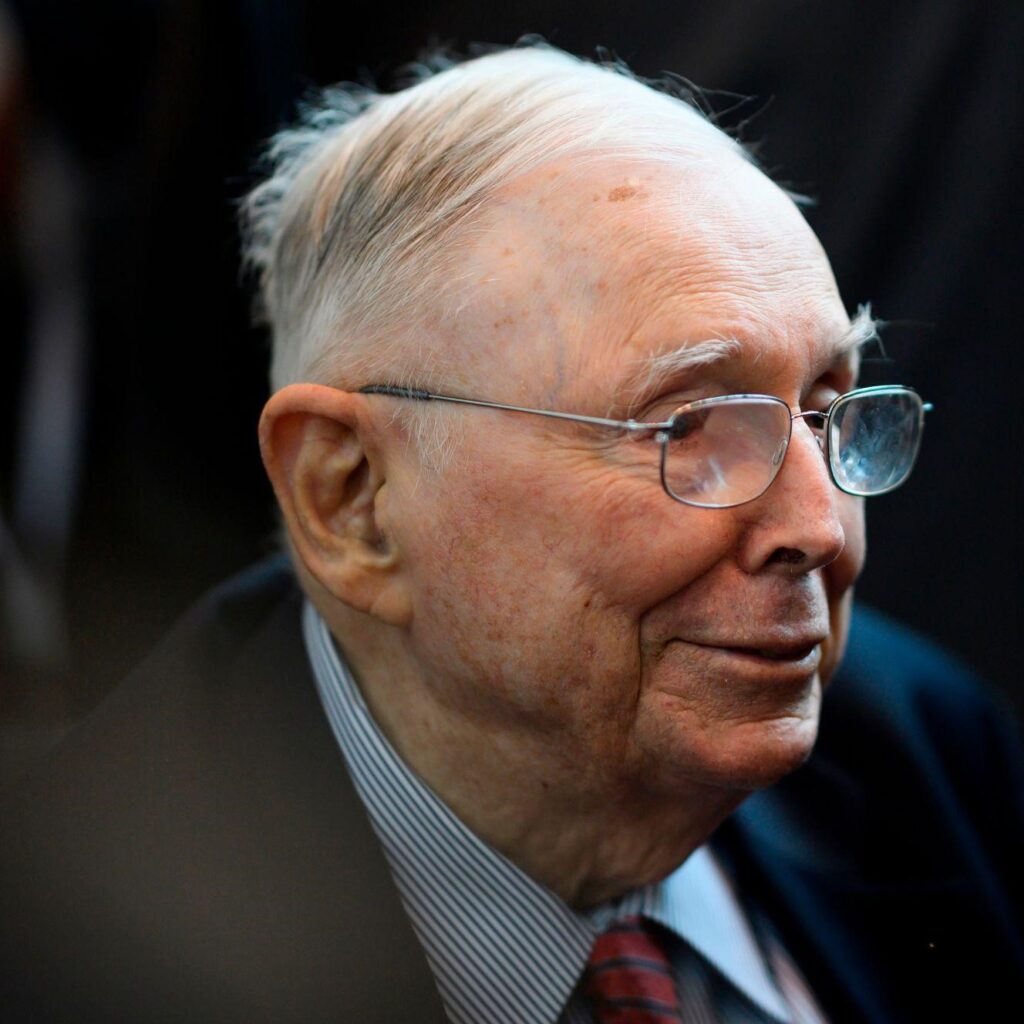
“There are only three ways a smart person can go broke: liquor, ladies, and leverage“
– Charlie Munger
When you use 5-to-1 leverage (putting 20% down), you are a genius when prices go up 4%. You’re making 20% on your money. But leverage is a double-edged sword.
Let’s apply Inversion to our property path. How do we achieve a permanent loss of CHF 300,000?
- The Negative Equity Spiral: If Swiss property prices drop 20%, which they did in the 1990s, your CHF 300,000 is gone. You now owe the bank CHF 1.2 million for an asset worth CHF 1.2 million. You have 0% equity. If prices drop 25%, you owe more than you own.
- Unlike an ETF, you cannot sell 10% of your kitchen to pay for a medical emergency. You may end up being “house rich and cash poor.” In a crisis, your liquidity is zero if you have all your money in a property.
- The Interest Rate risk: I mentioned a 1.5% mortgage. That’s lovely. But what if rates go to 5% or 7% like they did in the ’90s? If your interest costs triple and your property value is stagnant, you are being bled to death by a thousand cuts.
In Switzerland, everyone thinks property is safe because it’s been a one-way street for 25 years. That’s exactly when I get nervous and remember what Charlie’s partner Warren Buffett said, “You only find out who’s swimming naked when the tide goes out.”
Let’s invert the situation: If you can’t survive a 30% drop in property prices without being forced to sell by the bank or your own nerves, you shouldn’t buy the house. You aren’t “investing”; you’re gambling with 5x leverage.
If we inverted for equities we would conclude that the greatest risk to an equity investor isn’t the market – it’s the liquidity. Having the ability to sell at any second is a “trap” for a weak mind. Property removes that trap.
We focus on returns but spreadsheets don’t have emotions.
The best investment is the one you can actually hold onto for 30 years without acting.
In this article, I explain a smart way to deleverage your mortgage using pre-tax money: A Proven Way to Repay Your Mortgage — How to Become Debt-Free in Switzerland.
Your most important asset: Time
For me personally, this is one of the strongest arguments against buying property.
Because property consumes time.
First, you need to find the right home, which is super time consuming in tight Swiss market. Then you need to secure financing. Then come the documents, the negotiations, the notary, the move. And after that, the property does not disappear from your life. It needs maintenance, repairs, decisions, meetings, invoices, renovations, and sometimes unpleasant surprises.
None of this shows up in a spreadsheet.
Of course, renting also takes some time. If your landlord cancels your contract, you may need to search for a new apartment, move again, furnish a new place, and start over. In many countries, that is a normal part of life every few years.
But Switzerland is a bit different. Tenants are relatively well protected, and rental contracts can be quite stable.
So when I compare renting and buying, I do not only compare francs. I also compare the life admin. And to be honest I really like properties I have been investing in real estate for almost 17 years. I enjoy analysing cash flows, optimising financing structures, and figuring out how all the pieces fit together.
Someone recently told me something that stayed with me: when you own property, it almost has to become one of your hobbies. Otherwise, it takes too much of your time and becomes annoying. And I think there is a lot of truth in that.
My Verdict as an Actuary
Here is what I said to a friend considering home purchase recently.
Do not buy because someone tells you that buying is cheaper in Switzerland. Particularly be aware of any analysis that comes from markets other than Swiss as they don’t capture Swiss mortgage rules and market reality. You should always analyse for your own reality before making a multi-millions CHF decision.
If you want you can run your numbers in my free calculator where I captured full opportunity cost:
The same do not decide to keep renting because someone told you that equities perform better than real estate. Also be aware that spreadsheet assumes a level of investor discipline that most people, if they are honest with themselves, do not consistently have. The 90% underperformance is a measurement of human behaviour under stress.
Run the real numbers for your specific situation. Calculate what your CHF 300,000 would earn in a low-cost SPI tracker or global ETF over 10 years. Subtract every real cost of Swiss homeownership. Then honestly assess your own behavioural track record and your tolerance for the risk. Account for time investment.
If, after doing all of that, property still wins – and in Switzerland, across many realistic scenarios, it does – then buy with a clear understanding of exactly what you are trading away.
If equities win, keep renting with a clear conscience, knowing that you aren’t “throwing money away,” but are instead paying for the freedom to keep your capital compounding in the world’s most productive companies.
The opportunity cost framework is not a reason to rent or to buy. It is a reason to think – carefully, with real numbers – before you sign anything.
The Next Step: The numbers in this article assume a stable market, but as an actuary, I know that stable is a dangerous word. If you want to see the inverted version – where I calculate exactly how long it took 1990s homeowners to recover their lost compounding years compared to ETF investors – make sure you are on my newsletter list. I’ll share the ‘Real estate market crash analysis’ case study there shortly.
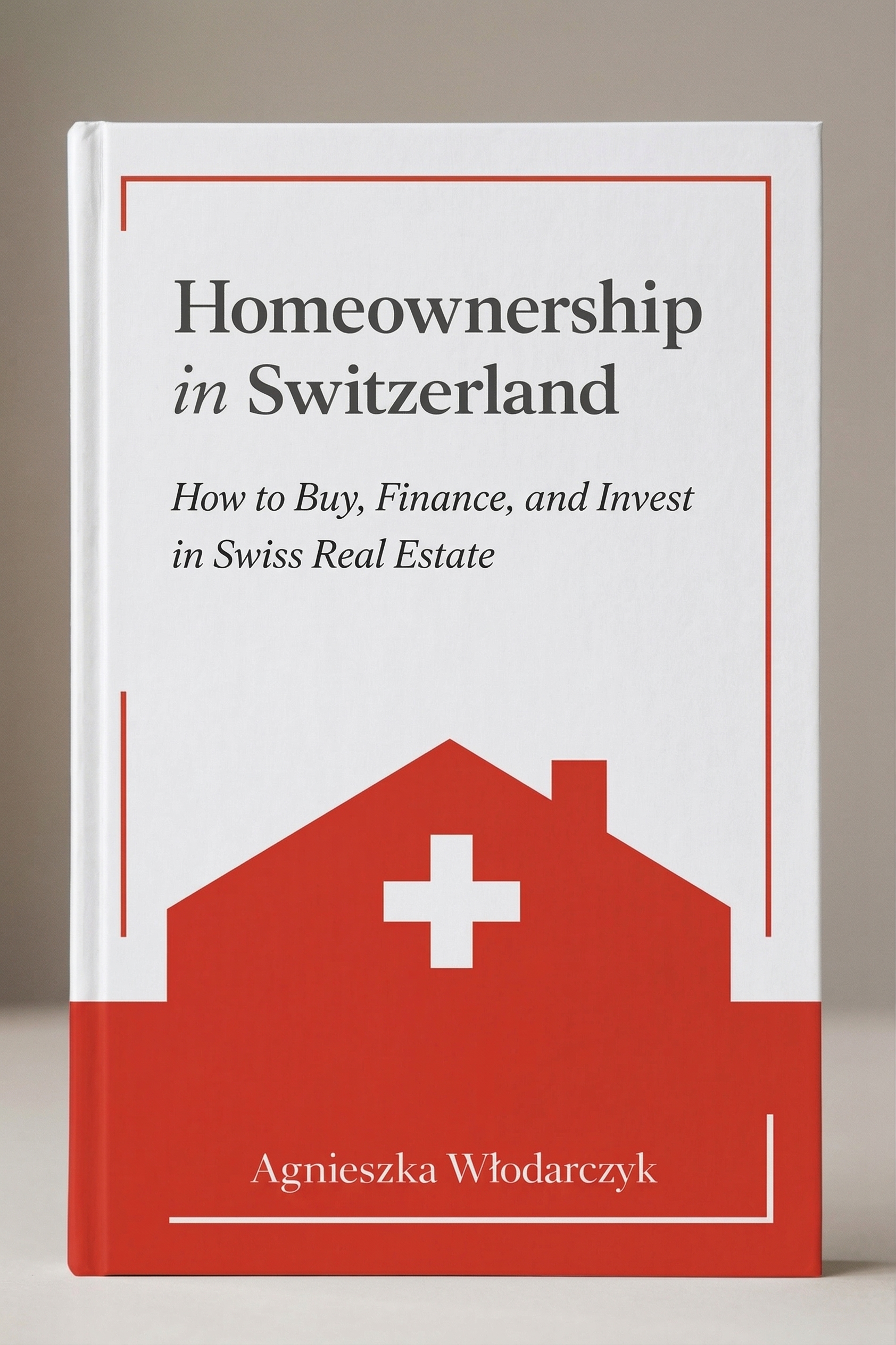
This article is part of a blog series on homeownership in Switzerland. Each post is a simplified, standalone piece drawn from my upcoming book Homeownership in Switzerland: How to Buy, Finance and Invest in Swiss Real Estate, which looks at the topic holistically.
Coming in 2026 Homeownership in Switzerland
I’m writing a book for people who want to understand the Swiss property system before making a million-franc decision
Sources and Further Reading
- SPIVA Global Scorecard, S&P Dow Jones Indices (published annually) – https://www.spglobal.com/spdji/en/research-insights/spiva/
- Dalbar Quantitative Analysis of Investor Behaviour (QAIB) 2024 – https://www.dalbar.com
- Swiss Performance Index (SPI) historical data – SIX Swiss Exchange –https://indexdata.six-group.com/equity/spi.html
- Swiss National Bank (SNB) – Swiss Real Estate Statistics – https://www.snb.ch
- Swiss Federal Tax Administration – Eigenmietwert guidance – https://www.estv.admin.ch
- Wuest Partner – Swiss Property Market Report (annual) – https://www.wuestpartner.com
- FINMA Circular 2012/3 – Mortgage Lending Standards – https://www.finma.ch
- UBS Swiss Real Estate Bubble Index (quarterly) – https://www.ubs.com/ch/en/private/real-estate.html
Frequently Asked Questions
1. Am I missing massive leverage gains by staying in ETFs?
Potentially, yes.
One of the reasons Swiss property has historically created significant wealth is that homeowners are typically investing with 5:1 leverage. A CHF 300,000 down payment can control a CHF 1.5 million asset. If that property appreciates by 4% annually, the return on your equity can become much higher than the 4%.
That is one of the mechanics behind long-term homeowner wealth accumulation in Switzerland.
But leverage also amplifies losses, not just gains.
I break down the full actuarial comparison between leveraged Swiss property and ETF investing in this article.
2. Am I underestimating the opportunity cost of my down payment?
In many cases, yes.
Most people compare: monthly rent versus monthly mortgage payments.
But that ignores one of the largest variables in the analysis: what your down payment could have earned elsewhere.
A CHF 300,000 down payment invested in equities may compound significantly over decades. But a leveraged property purchase can also create amplified returns through appreciation and forced equity accumulation.
The only sensible comparison is an “apples-to-apples” framework that includes:
- leverage,
- taxes,
- maintenance,
- investment returns,
- opportunity cost,
- and behavioural realities.
That is exactly what I modelled in my article.
3. Why do homeowners often sleep well while stock investors panic?
Because property hides volatility.
ETF investors see price fluctuations every single day. A portfolio can drop 20% in a few days, which creates emotional pressure to sell.
Homeowners usually do not experience investing this way. Their property valuation is not constantly flashing red on an app. As a result, many people hold property through downturns far more calmly than they hold equities.
Ironically, property’s biggest “flaw” – illiquidity – may also be one of its strongest behavioural advantages.
I explore this behavioural aspect in more detail in my article.
3. Is property actually an investment, or just a lifestyle expense?
Many people argue that a primary residence is just consumption.
But rent is also a lifestyle expense.
The difference is that homeowners are simultaneously:
- consuming housing,
- building equity,
- and controlling a leveraged asset.
That does not automatically make property superior to equities. But dismissing owner-occupied property as “not an investment” ignores the long-term financial mechanics behind leverage, appreciation, amortisation, and inflation.
I explore that comparison in detail here: ETF vs Swiss Property.
4. Are people underestimating the downside of leverage?
Yes – especially after decades of rising property prices.
Current generation of people in their mid 30s only experience falling interest rates and appreciating real estate. That’s why leverage starts feeling safe. But leverage amplifies losses just as aggressively as gains.
During the Swiss property downturn of the 1990s, many homeowners experienced years of negative equity despite owning what was considered safe Swiss real estate.
That historical period is often forgotten in today’s market discussions.
I explain the mechanics of leverage in my existing articles, and I am currently preparing a detailed case study on the Swiss property market crash of the 1990s, including how leverage affected homeowner wealth during that period.
Join 1'400+ readers making smarter Swiss financial decisions:
Send me the next guide
Hello,
I will be worthwhile updating your analysis and replacing URTH with either VT (https://investor.vanguard.com/investment-products/etfs/profile/vt) or, if you need sth listed in Europe, VALLD (https://www.ch.vanguard/en/private-investor/product/etf/equity/E162/ftse-global-all-cap-ucits-etf-usd-dist) – much cheaper than iShares ETF.
Cheers,
Michal